A vaginal dilator is a smooth, tube-shaped tool you insert into the vagina to gently stretch the tissue over time. People use them for a range of reasons: managing vaginismus, working through deep pain during sex (dyspareunia), recovering from pelvic surgery, and rehabilitating after radiation therapy. The right starting point depends on what's driving your symptoms, how sensitive the tissue is, and what your physiotherapist or doctor has recommended.
The variables to weigh are smaller than the catalogue makes it look. Material, tip shape, size range, handle design, and whether the set is wearable. The comparison below works through each of those, then maps the brand sets currently available in Australia against them.
One distinction worth flagging first. Vaginal dilators work the entrance of the vagina and the canal itself — the ring of tissue at the introitus and the first few centimetres in. A pelvic wand reaches further up and targets deeper trigger points in the pelvic floor muscle. If your pain sits deeper than the entrance, our step-by-step guide on how to use a pelvic wand covers a different tissue layer from the work you do with a dilator.
What are vaginal dilators used for?
Most referrals for dilators fall into one of three groups.
- Vaginismus and protective muscle guarding - the pelvic floor reflexively tightens around any attempt at insertion, making penetration uncomfortable or impossible. Graduated dilators give the nervous system a calm, predictable way to retrain that response. For the broader rehab picture, our home guide for managing vaginismus walks through the full self-directed approach.
- Painful sex, including deep pain during intercourse - where tightness or scarring at the entrance or along the canal is contributing to dyspareunia.
- Post-radiation and post-surgical rehabilitation - particularly after pelvic brachytherapy or external beam radiation, where vaginal tissue can lose elasticity and become prone to scarring (vaginal stenosis). Dilator use is part of standard oncology recovery to maintain the length, width, and openness of the canal.
Dilators are also used in pelvic floor physiotherapy for tissue desensitisation, body mapping, and slowly rebuilding tolerance to internal touch after birth trauma or sexual trauma.
Silicone vs plastic vaginal dilators
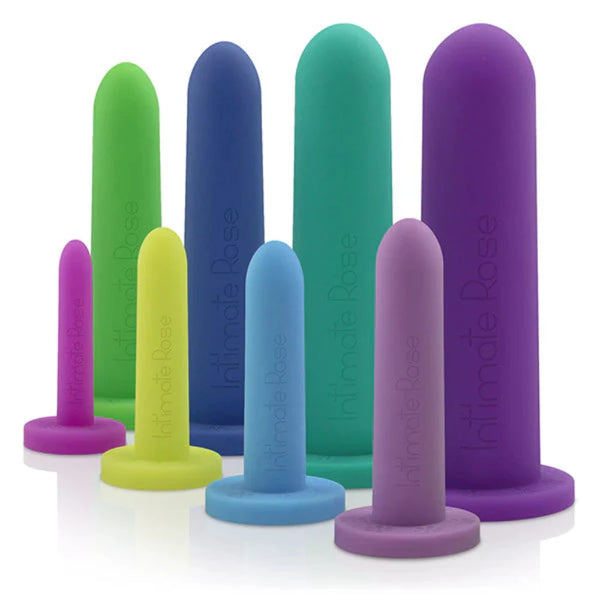
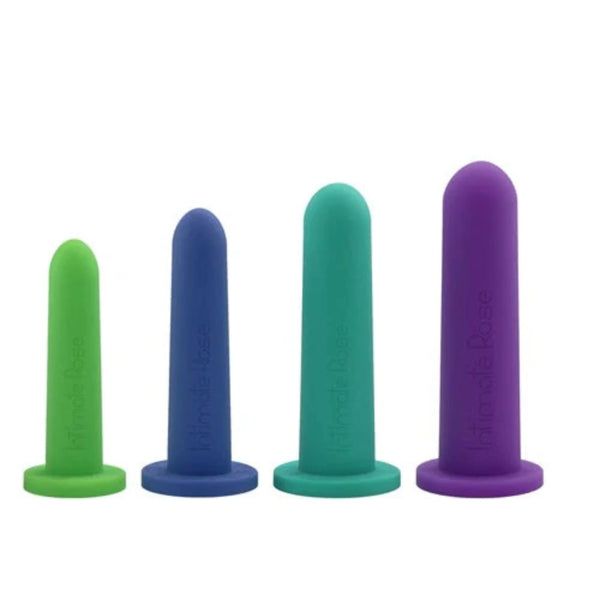
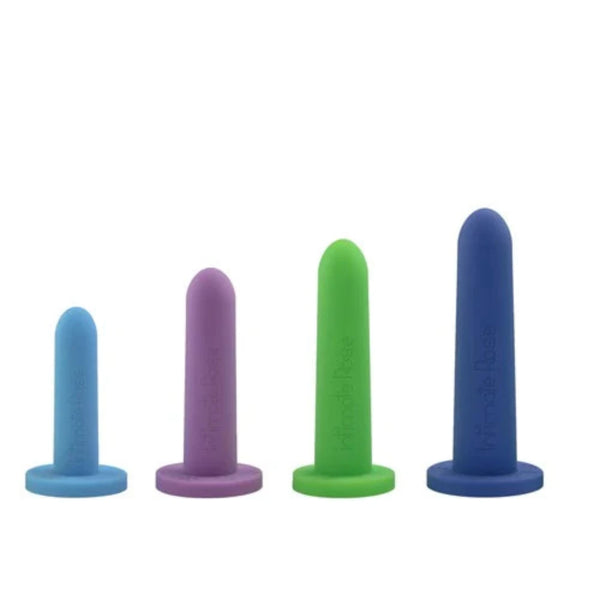
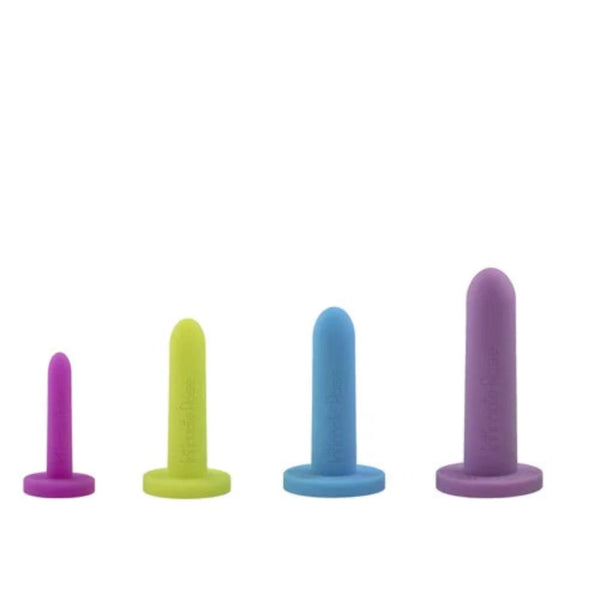
Silicone dilators are softer, slightly flexible, and warm to body temperature quickly. The smooth surface and gentle give make them easier to insert when tissue is sensitive or guarded. In Australian pelvic physiotherapy clinics, silicone is the most commonly chosen starting point for vaginismus, dyspareunia, and most postpartum or post-surgical scenarios. It tends to be better tolerated and less likely to provoke a guarding response. The Intimate Rose range is the silicone set most often used by Australian pelvic physios, with graduated sizes across four set options to match where you are in your rehab.
A note on materials. Silicone used in adult devices isn't regulated in Australia the way a medical device is, so the phrase "body-safe" isn't a uniform standard across brands. Every dilator set Blossom stocks has been independently reviewed for material safety, so the silicone is genuinely silicone — not a silicone-blend that can leach over time. If you're shopping outside our range, ask the supplier for material certification before you commit.
Plastic dilators are rigid and hold their shape under pressure. That firmness is the feature, not a flaw, in certain clinical contexts. After radiation therapy the vaginal walls can become less elastic and more prone to scar formation. A firm, non-tapered plastic dilator delivers consistent pressure along the canal and helps maintain its length and shape during recovery. The Amielle Care and Comfort range is the UK-origin plastic option that has long been used in Australian pelvic physiotherapy clinics for this purpose.
The choice between silicone and plastic isn't a quality contest. It's a fit-for-purpose one. Your physio or oncology nurse will usually steer you toward one or the other based on what your tissue actually needs.
Tapered vs non-tapered tips
Tapered dilators narrow gradually at the tip. The softer entry is helpful when the pelvic floor is bracing — the smaller starting point gives the muscles less to react to, and the gentle widening lets the tissue accommodate without an abrupt stretch. Most physios start vaginismus and dyspareunia patients on tapered dilators for this reason.
Non-tapered dilators keep a consistent width along their length. They are typically chosen after pelvic cancer treatment, where the clinical goal is to maintain the full diameter of the canal and prevent narrowing (vaginal stenosis) or fibrotic shortening. A uniform shape delivers even pressure top to bottom, which is what post-radiation tissue tends to need.
Handle options
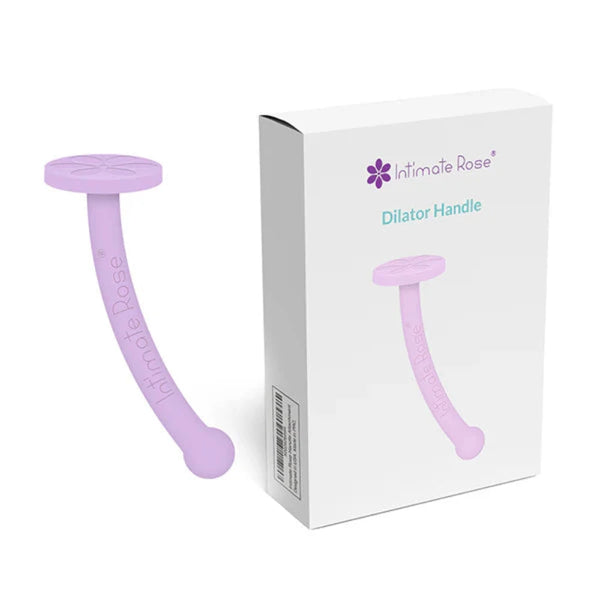
Handles fall into three patterns: a built-in finger loop, a detachable handle that ships with the set, or an extension handle sold separately. CalExotics Inspire and Alena sets use the ergonomic loop. Amielle includes a fixed plastic handle. Intimate Rose sells an extension handle as an add-on.
A handle matters more than most people expect. Limited dexterity, mobility restrictions, a short reach, or anxiety about depth all make a handle the difference between a manageable session and a frustrating one. If any of those apply to you, prioritise a set that includes a handle, or factor in the cost of an extension.
Wearable vs non-wearable
Non-wearable dilators are inserted, held in place, and removed at the end of the session. This gives you full control over depth, pressure, and duration. You can pause, adjust the angle, or stop at any point. For the first weeks of dilator work, especially with high baseline pain or anxiety, that level of control is usually what people need.
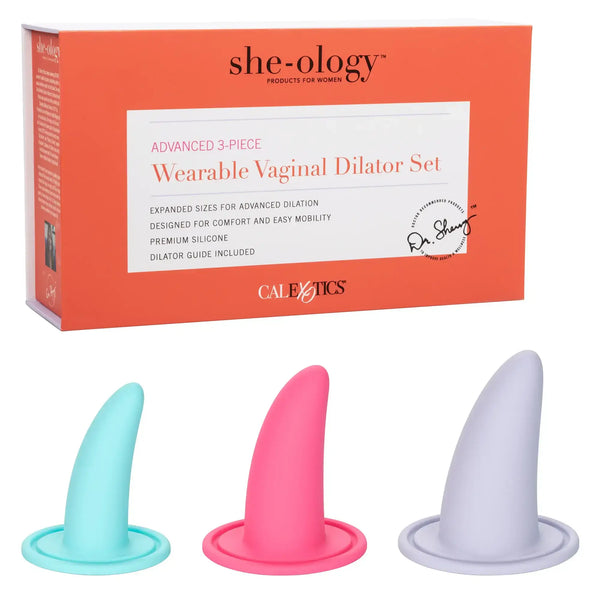
Wearable dilators (the CalExotics She-Ology sets are the example) have a flared base that lets them stay in place during everyday activity. Once tissue tolerance is established, passive wear extends total exposure time without requiring an active session. They're not a starting tool. They're a later step in a rehab plan, once your physio has cleared you for longer-duration use.
How long do you leave a dilator in for?
A typical session is 10 to 15 minutes of held insertion at a single size, often with gentle internal movement to map and desensitise the tissue. For post-radiation patients, the protocol used at oncology services like Chris O'Brien Lifehouse is a minimum of three sessions a week, indefinitely. For vaginismus and pelvic pain work, frequency varies. Three to five sessions a week is a common starting point, scaled by your physio. Longer sessions aren't better. Consistency is what shifts tissue.
Can you use fingers instead of dilators?
For some stages of pelvic floor rehab, yes — and many physios use finger-based work alongside dilators. But fingers have limits. They don't give you a calibrated, repeatable diameter you can progress in measured steps, and they're harder to use solo for the kind of sustained, held insertion that retrains the nervous system. A graduated dilator set is the tool because each size is a discrete, measurable target you can move through.
How long does it take for vaginal dilators to work?
Most people notice change in tissue comfort within 4 to 8 weeks of consistent use. Meaningful progression through the sizes typically takes 3 to 6 months. Post-radiation rehab is often ongoing rather than goal-based — the dilator becomes part of long-term maintenance to preserve the canal.
The honest answer is that there's no fixed timeline. The variables that matter most are how consistent your sessions are, how appropriately the starting size was matched to your tissue, and how well the dilator work is paired with broader pelvic floor physio support.
Vaginal dilator sets available in Australia
Sizes and materials at a glance for the sets we and other Australian retailers stock. Blossom carries the Intimate Rose silicone range. The other sets are listed for comparison so you can see how they sit against each other.
| Brand | Set | Material | Diameter Range (cm) | Length Range (cm) | Qty | Tip Design | Handle | Wearable |
|---|---|---|---|---|---|---|---|---|
| Intimate Rose | Full (1–8) | Medical grade silicone | 1.1–3.7 | 7.1–16.5 | 8 | Tapered | Extension handle sold separately | No |
| Intimate Rose | Small (1–4) | Medical grade silicone | 1.1–2.4 | 7.1–11.4 | 4 | Tapered | Extension handle sold separately | No |
| Intimate Rose | Medium (3–6) | Medical grade silicone | 2.1–2.7 | 9.4–14.2 | 4 | Tapered | Extension handle sold separately | No |
| Intimate Rose | Large (5–8) | Medical grade silicone | 2.5–3.7 | 11.5–16.5 | 4 | Tapered | Extension handle sold separately | No |
| Amielle | Comfort | Rigid plastic | 1.5–3.5 | 7–16 | 5 | Tapered | Handle included | No |
| Amielle | Care | Rigid plastic | 2.0–3.0 | 9–14 | 4 | Non-Tapered | Handle included | No |
| CalExotics | Dr. Laura Berman Alena | Silicone | 1.25–2 | 7.5–10.75 | 3 | Tapered | Built-in ergonomic finger loop | No |
| CalExotics | Inspire 5-Piece | Body-safe silicone | 1.25–3.25 | 7.5–14 | 5 | Tapered | Built-in ergonomic finger loop | No |
| CalExotics | Dr. Laura Berman Alena Rechargeable Vibrating | Rigid plastic + silicone sleeve | 2–3.75 | 9–16.5 | 4 | Tapered | Handle included | No |
| CalExotics | Inspire 3-Piece Vibrating | Body-safe silicone | 2.5–3.25 | 12.75–14 | 3 | Tapered | Built-in ergonomic finger loop | No |
| CalExotics | She-Ology 5-Piece | Body-safe silicone | 1.35–3.0 | 6.8–8.5 | 5 | Tapered | No | Yes |
| CalExotics | She-Ology 3-Piece | Body-safe silicone | 3.25–4.9 | 8–9.5 | 3 | Tapered | No | Yes |
If you're not sure which set to start with, the safest default for almost every scenario other than post-radiation oncology is a tapered silicone set with a size range that starts small enough to be non-threatening on day one. Browse the full Blossom vaginal dilator range or book in with a pelvic floor physiotherapist who can match the set to what your tissue actually needs.