Skip to content
Menu

Round Ligament Pain

Support for round ligament pain with our collection of products designed for women during pregnancy. Round ligament pain, a common discomfort caused by the stretching of ligaments as the uterus grows, can result in sharp or aching pains in the lower abdomen. Our round ligament pain support products are chosen with comfort in mind for expecting mothers.

Our collection features pregnancy belly bands and support belts, which provide targeted support to reduce pressure on the round ligaments and ease discomfort. These items help improve posture and distribute the weight of the growing belly to ease the strain on the lower abdomen. For those looking for additional support, we also offer compression leggings that support the pelvic area.

Each product in our round ligament pain support collection is designed with comfort and functionality in mind, allowing you to stay active and comfortable throughout your pregnancy. Whether you're looking for belly support bands or gentle compression wear, we have the solutions you need to manage round ligament pain and enjoy a more comfortable pregnancy.
Sorted by:
Showing 11 of 11 products

Filters

Choosing a maternity support belt for round ligament pain

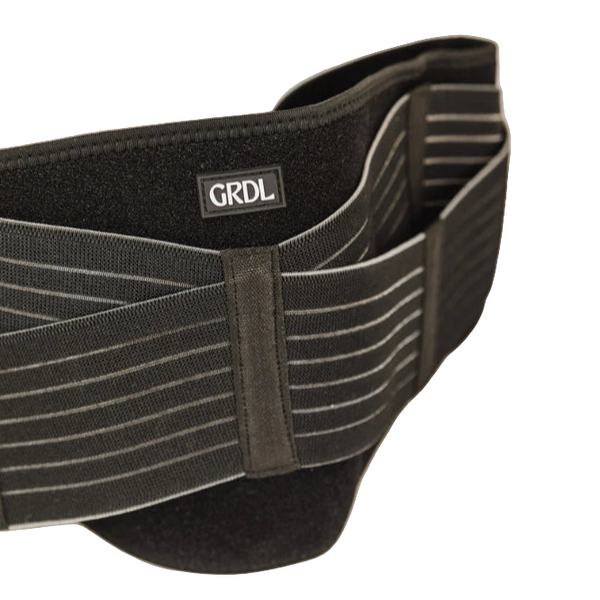
A maternity support belt can't switch round ligament pain off. What it does is carry some of the bump's weight and ease pelvic pressure, so sudden movements have less to pull against. The Belly Bands maternity belly band is the adjustable starting point; the maternity sacroiliac and belly support belt adds a triple-layer panel that cradles the bump and steadies the lower back.

When does round ligament pain start?

Most women first notice round ligament pain in the second trimester, from around week 14, as the uterus grows quickly and the ligaments anchoring it stretch. Episodes are short, seconds to a few minutes, and triggered by quick position changes. For many it eases by the third trimester.

Round ligament pain or pelvic girdle pain?

Round ligament pain is a brief, sharp pull low at the front of the belly or groin, set off by sudden movement. Pelvic girdle pain is a longer ache around the pubic bone, hips or lower back that builds with walking and stairs. If yours sounds like the second, our pelvic girdle pain support range covers belts fitted for the SI joints.

A woman in a gray tank top and black shorts demonstrates wearing the Serola Belt - Pregnancy Sacroiliac Belt by Serola, fastening the Velcro strap around her hips for SI joint support and lower back pain relief while smiling at the camera.

Part of a physio-led pregnancy range

Blossom Pelvic Health was founded by a physiotherapist focused on pelvic health, and this page is one lane of a wider range: pregnancy support products for every stage, the full collection of pregnancy support belts, bands and braces, and pregnancy compression garments for all-day, under-clothes support. We don't accept change-of-mind returns on intimate products. If an item arrives faulty or damaged, email hello@blossompelvichealth.com.au and we'll look after you. Some items, like SRC garments, have specific exceptions; see our returns policy.

Your round ligament pain questions, answered

A sharp, stabbing or pulling sensation low in the belly or groin, often on one side, lasting seconds to a few minutes. It's usually set off by standing quickly, rolling over in bed, coughing, sneezing or laughing, and it settles again when you rest.

Move slowly when you change position, support your bump with your hand when you sneeze or cough, and try gentle stretching or a warm bath. Many women also wear a belly band for walks and busy days. Ask your midwife or physiotherapist what suits your stage.

For most women it fades in the third trimester or settles soon after birth. If the pain is constant, worsening, or still hanging around after your baby arrives, mention it to your GP or a pelvic health physiotherapist rather than putting up with it.

See your midwife or doctor promptly if belly pain comes with bleeding, fever, chills, contractions, unusual discharge or pain when you wee, or if it's severe and doesn't settle with rest. Round ligament pain is brief and movement-related; anything behaving differently deserves a check.

Usually, yes. It's a normal stretch response rather than an injury. Warm up gently, avoid sudden changes of direction, and slow your transitions between positions. If pain starts mid-workout, ease off and let it pass. Check with your midwife or physio if it keeps interrupting exercise.

Many women find a maternity belly band, or a support brief with a belly-cradle panel, makes standing and walking more comfortable by gently carrying the weight of your bump. They support rather than treat the pain. A pelvic health physiotherapist can help you choose and fit one.

Try lying on the side opposite your pain, or your left side, with a pillow between your knees and one supporting your bump. A pregnancy or wedge pillow can help. Move slowly and log-roll when you turn over, keeping your knees together to avoid a sudden pull.

No. Round ligament pain is a normal response to the ligaments stretching as your uterus grows, and it isn't dangerous for you or your baby. It's uncomfortable, not harmful. Still, if pain comes with bleeding, fever, contractions or won't settle, contact your midwife or doctor.

More on pregnancy aches and pressure

Two reads for when the twinges low in your belly don't quite match the round ligament pattern.

Pregnant woman lying on her side in bed with a hand on her belly, easing pelvic girdle pain

Symphysis pubis dysfunction (SPD) in pregnancy

Pain at the front of the pelvis that isn't round ligament pain: what SPD is and the day-to-day adjustments that help.

Read more
Pregnant woman holding her lower belly and groin, where vulvar varicosities can cause aching and heaviness

Vulvar varicosities in pregnancy

Why heaviness and pressure can build low in the pelvis, and where support garments fit into managing the load.

Read more

Your Cart

Your Cart is empty
Let's fix that

Your Wishlist