Deep pain during sex is one of the most common things women bring into my clinic, and one of the least clearly explained anywhere else. Patients usually arrive with the same opening line: "It only hurts when he's all the way in." They've been told it's probably stress. Or that they need more lube. Or that some women are just "built that way."
None of that is the answer.
When sex hurts deep inside, it's often one of the structures inside the pelvis getting pressed, stretched, or irritated by penetration. Once you know which structure is the trouble-maker, the path forward gets a lot clearer. This guide walks you through what each of those structures is, how it tends to cause pain, and what actually helps.
Surface pain vs deep pain: which one is yours?
The first thing worth sorting out is where it hurts, because the cause list is completely different depending on the answer.
Surface (entry) pain sits at or just inside the vaginal opening. It tends to feel like burning, stinging, or a sense of "I can't open." Common drivers are vaginal dryness, low oestrogen, vaginismus, vulvodynia, infections, or scarring from birth.
Deep pain sits higher up, somewhere behind the pubic bone or low in the belly. It often shows up only with thrusting, certain positions, or when your partner is fully in. The ache or sharp twinge can linger after sex finishes, sometimes for hours. This is the kind of pain we're getting into here.
If yours is mostly entry pain, you're in different territory. Common drivers there include vaginismus, vulvodynia, and tissue changes around menopause, which need a different toolkit.
What structures cause deep pain during sex in females?
Deep penetration brings the top of the vagina into contact with (and pressure against) the cervix, the uterus, the back of the bladder, the bowel, and the ligaments that suspend the uterus inside the pelvis. The pelvic floor muscles wrap around all of it. When any one of those structures is inflamed, scarred, tense, or shifted out of its usual position, sex starts to hurt deep inside. Here's how each one shows up.
The cervix and uterus
In neutral positions, the cervix sits up and back. With deep thrusts (or particular positions like missionary with hips flexed, or anything that pushes the penis straight in), the penis can hit the cervix directly. Clinicians call this collision dyspareunia. It's a real, mechanical thing. Not in your head.
A few situations make it more likely:
- A retroverted (tilted) uterus - common in roughly one in four women, and the cervix sits in a more exposed line of contact during certain positions.
- Fibroids sitting near the top of the vagina can act like a poking obstacle.
- Adenomyosis (where uterine lining tissue grows into the uterine muscle wall) makes the uterus heavier, more tender, and more sensitive to pressure. It often comes with very heavy, very painful periods, and is a recognised cause of deep dyspareunia in its own right.
The pelvic floor muscles
This is the structure most people miss. Your pelvic floor is a hammock of muscle that runs from the pubic bone to the tailbone and side-to-side between your sit bones. When those muscles are overactive (too tight, holding too much tone), penetration presses on muscle that's already in spasm, and it hurts.
Pelvic floor overactivity rarely turns up alone. It's the body's protective response to almost every other entry on this list. Endo flares, a painful bladder, a hard-to-empty bowel, a history of painful sex. The muscles tighten in response, and now they're a pain generator of their own. Even in women with moderate-to-severe endometriosis, bladder and pelvic floor tenderness independently drives deep pain during sex.
That's why pelvic physiotherapy makes such a difference. The right physio works on the muscle layer directly, not just the underlying condition.
The bladder
The base of your bladder sits right against the front wall of your vagina. If it's inflamed, irritated, or hypersensitive (as in interstitial cystitis / painful bladder syndrome), deep penetration presses on it and pain follows. A study of 548 women at a tertiary pelvic-pain centre found bladder tenderness was independently associated with deep dyspareunia, alongside tenderness of the pelvic floor, cervix, uterus, and uterosacral ligaments.
Tells: the pain often comes with urinary urgency, frequency, or that "I just peed but I need to go again" feeling. It can also flare after sex.
The bowel
The lower bowel sits behind the vagina and the uterus. When it's full, irritated (think IBS), or affected by endometriosis lesions on the bowel surface, deep thrusting can press on it and trigger pain. Sometimes mid-sex, sometimes the next time you have a bowel motion. Patients often tell me, "It hurts more when I'm constipated", and that's not a coincidence.
The pouch of Douglas, ligaments, ovaries, and scar tissue
A handful of deeper structures sit at the very back of the pelvis and frequently get implicated in deep dyspareunia:
- The pouch of Douglas (also called the posterior cul-de-sac or rectouterine pouch) is the small space between the back of the uterus and the front of the rectum. It's the lowest point of the female pelvis when you're standing, and that geometry matters: endometriosis lesions and inflammatory fluid pool there because of gravity and retrograde menstrual flow. Lesions in the pouch of Douglas are one of the most strongly evidenced anatomical drivers of deep pain during sex, because they sit exactly where the cervix and posterior vaginal wall move during deep penetration.
- The uterosacral ligaments suspend the uterus from the back of the pelvis and form the upper edge of the pouch of Douglas. They're a classic site for endometriosis lesions and for tenderness after pelvic surgery, and they refer pain into the lower back as well as deep into the vagina.
- Adhesions and scar tissue from C-sections, endometriosis surgery, ruptured cysts, or pelvic infections can tether organs together. What used to glide now drags, and that drag becomes pain on deep penetration.
- Ovarian cysts can hurt directly when bumped, especially mid-cycle.
Is endometriosis the main cause of deep pain during sex?
For many women, yes. Endometriosis affects around 1 in 7 Australian women by age 44-49 (the AIHW's updated 2023 estimate, revised up from 1 in 9). And around 75% of women with endometriosis report some form of dyspareunia, with deep pain being the more common presentation. Lesions in the pouch of Douglas (the space behind the uterus) and on the uterosacral ligaments are particularly likely to cause deep pain because they sit exactly where deep penetration creates pressure.
But (and this is important) endo isn't the only cause. Even when endo is present, it's often the layered conditions on top (overactive pelvic floor, painful bladder, bowel sensitivity) that are driving the moment-to-moment pain. Treating just the endo and ignoring the rest is one reason surgery alone often doesn't fully resolve dyspareunia.
If you've been diagnosed, our guide to overactive pelvic floor muscles in endometriosis is worth a read.
Can a tilted uterus cause pain with deep penetration?
Sometimes, yes. A retroverted uterus is a normal anatomical variant, not a problem in itself. But in certain positions (anything that drives the penis straight back), the cervix sits more directly in the firing line. Switching to side-lying, spooning, or any position where you control the depth usually settles it. If pain persists in every position, the uterus tilt isn't the real story and something else on this list is.
What position helps reduce deep pain during sex?
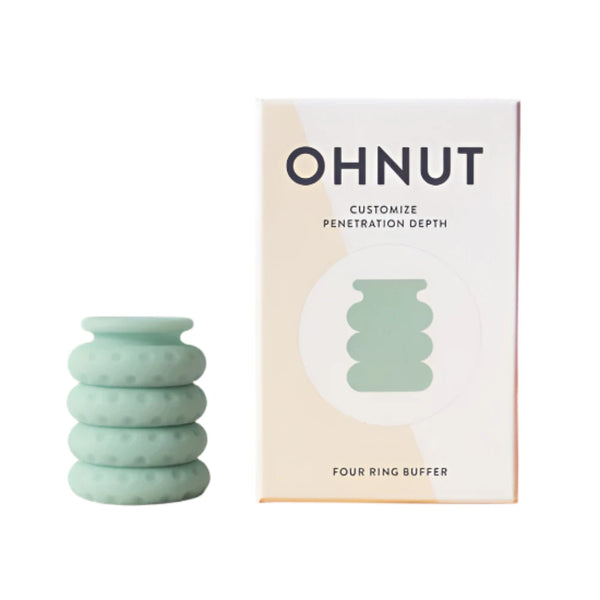
Anything that lets you control how deep penetration goes. Side-lying (spooning), woman-on-top with your weight back on your heels, and any position where the receiving partner can pull back are the gentlest. Adding a soft polymer buffer like Ohnut physically limits depth, and a 2024 pilot randomised trial found Ohnut significantly reduced deep dyspareunia in women with endometriosis. It's one of the simplest tools for collision dyspareunia we recommend. When penetration isn't the priority, gentle, body-safe vibrators with a slim shape can keep intimacy on the menu without leaning on it.
A generous, well-chosen lubricant also helps even when dryness isn't the main issue, because friction at the entrance ramps up the protective tone in the pelvic floor. A silicone-based lube lasts longer for slower, gentler sex; our full lubricant guide walks through what to pick.
What you can do at home today
A short list of things that genuinely move the needle, in the order I usually suggest them:
- Take penetration off the table for a bit - intimacy without penetration while you work on the cause is not a step backwards. It's how nervous systems learn safety again.
- Reduce the depth, every time - side-lying, shallow positions, or a depth limiter are not "settling for less." They're giving inflamed tissue room to heal.
- Use a proper lubricant - even when dryness isn't your main issue. Friction tightens the pelvic floor.
- Start gentle pelvic floor downtraining - diaphragmatic breathing, heat on the lower belly, and hands-on muscle work all calm an overactive pelvic floor. The two tools to know are different: vaginal dilators work on entrance pain and gradual desensitisation, while a pelvic wand reaches the deeper muscles (obturator internus, levator ani) where trigger points and tension drive deep pain. Many women with deep dyspareunia find a wand more useful than a dilator set, though both have their place.
- Track when it's worse - period phase, bowel days, bladder flare days, stress weeks. Patterns tell you which structure is involved.
- Don't push through it - "powering through" pain teaches your nervous system that sex equals threat, and the pelvic floor learns to brace harder. The cycle gets worse, not better.
When to see a pelvic floor physiotherapist
If deep pain has been happening for more than a few weeks, isn't shifting with position changes, comes with bladder or bowel symptoms, or is starting to make you avoid sex altogether, please see a pelvic floor physio. A good one can tell, in a single assessment, which structures are tender, whether the pelvic floor is overactive, whether the bladder base is involved, and what's most likely behind it. That picture is what points to the right treatment plan.
You don't need a referral, and you don't need to have a diagnosis already. Coming in with "deep sex hurts and I don't know why" is plenty.
The other call to make is to a GP who takes endometriosis and pelvic pain seriously. If you've been told for years that it's "in your head," "just stress," or "normal," it isn't, and you deserve to be believed.
If you're at the point of choosing tools, our products for painful sex collection is sorted by pain pattern rather than product type, and our pelvic pain support range is pulled together for muscle-related pain.
Pain during deep penetration is common. It is not normal, it is not your fault, and it is almost always treatable once you know which structure is doing the talking.
References
- Mercorio A, et al. Adenomyosis: A potential cause of surgical failure in treating dyspareunia in rectovaginal septum endometriosis. International Journal of Gynecology & Obstetrics. 2024. https://doi.org/10.1002/ijgo.15975
- Orr NL, Noga H, Williams C, Allaire C, Bedaiwy MA, Lisonkova S, et al. Deep Dyspareunia in Endometriosis: Role of the Bladder and Pelvic Floor. The Journal of Sexual Medicine. 2018;15(8):1158-1166. https://doi.org/10.1016/j.jsxm.2018.06.007
- Yong PJ, Williams C, Yosef A, Wong F, Bedaiwy MA, Lisonkova S, et al. Anatomic Sites and Associated Clinical Factors for Deep Dyspareunia. Sexual Medicine. 2017;5(3):e184-e195. https://pmc.ncbi.nlm.nih.gov/articles/PMC5562494/
- Australian Institute of Health and Welfare. Endometriosis in Australia 2023. Canberra: AIHW; 2023. https://www.aihw.gov.au/reports/chronic-disease/endometriosis-in-australia-2023/
- Mercorio A, et al. Painful sexual intercourse, quality of life and sexual function in patients with endometriosis: not just deep dyspareunia. Archives of Gynecology and Obstetrics. 2024. https://doi.org/10.1007/s00404-024-07643-7
- MacLeod E, Yong PJ, et al. Ohnut vs waitlist control for the self-management of endometriosis-associated deep dyspareunia: a pilot randomized controlled trial. Sexual Medicine. 2024;12(4):qfae049. https://pmc.ncbi.nlm.nih.gov/articles/PMC11365696/