Short answer: yes. Water-based lube is safe with every condom material sold in Australia: latex, polyisoprene (the non-latex type SKYN uses) and polyurethane. It is the one lubricant type that works with all three, and NSW Health's advice is that using lube with a condom actually makes the condom less likely to break, not more. The thing that damages condoms is oil, not water. The rest of this guide covers what that means in practice, which of the water-based lubes we stock are confirmed for which condom types, and how much to use.
It usually comes up at the end of an appointment. Someone is picking up their bag and says, half to themselves, that they stopped using condoms a while ago because it was uncomfortable, or that a condom broke and they still don't know why, or that they bought "the good lube" and it stung anyway. Sometimes it's a mum a few months postpartum who wants to use condoms until her cycle settles and has quietly decided the whole thing is too much friction to be worth it.
Almost none of these are condom problems. They're pairing problems. The wrong lubricant with the wrong material, or no lubricant at all, or a product with an ingredient that was always going to sting. Which is how someone ends up with a bathroom drawer of half-used bottles and the conclusion that condoms just aren't for them.
Nobody asks about this out loud, so it gets worked out by trial and error, usually late at night with the phone angled away. If any of that sounded like you, you are in extremely ordinary company. The good news is the answer is short and the fix is cheap.
Can you use water-based lube with condoms?
Yes, with any condom. Healthdirect Australia suggests water-based lubricant as the lubricant to reach for with a male condom, and NSW Health's Play Safe program puts it plainly: water or silicone based lube with a condom is the best way to protect yourself from STIs, and using lube reduces the chance of the condom breaking.
The reason water-based works with everything is chemistry, not marketing. Condom materials are damaged by oil. Water-based lubricant contains no oil, so there's nothing in it to weaken latex, polyisoprene or polyurethane. It sits on the surface, cuts friction, and rinses off with water.
The one honest trade-off: water-based absorbs into skin over a longer session, so you may need to add more partway through. That is a top-up issue, not a safety issue.
Which lubricants are not safe with condoms?
Oil-based products are the problem, and it's a bigger category than people expect. Petroleum jelly, baby oil, massage oil, coconut oil, olive oil, body butter, hand cream and most "natural" DIY options all count. Healthdirect's wording is that oil-based lubricants make a latex condom more likely to break. Polyisoprene behaves the same way as latex here, so the same rule applies to SKYN-style non-latex condoms.
Polyurethane is the exception. It's a plastic rather than a rubber and generally tolerates oil, but polyurethane condoms are less common on Australian shelves, and there's no reason to use oil with them when water-based does the job with no risk at all.
Silicone lube is also condom-safe with all three materials. The reason we send most people to water-based first is that silicone can't be used on silicone dilators, pelvic wands or silicone toys, so if any of those are part of your life, one bottle of water-based covers everything. We've compared the two properly in our silicone vs water-based lube guide.
Does the condom material change which lube you need?
Only if you're using oil. For water-based lube, the answer is the same across all three. Here's the quick reference.
| Condom material | Water-based lube | Silicone lube | Oil-based |
|---|---|---|---|
| Latex (most condoms) | Safe | Safe | No |
| Polyisoprene (SKYN, non-latex) | Safe | Safe | No |
| Polyurethane | Safe | Safe | Usually tolerated |
Not sure what your condoms are made of? It's printed on the box. If it doesn't say, assume latex.
Which of our water-based lubes are confirmed for which condoms?
Every water-based lubricant we stock is safe with latex. Where the manufacturers differ is which non-latex materials they have specifically tested and named on the label. We've listed exactly what each brand states rather than rounding it up to "all condoms", because that's the kind of shortcut that gets people into trouble.
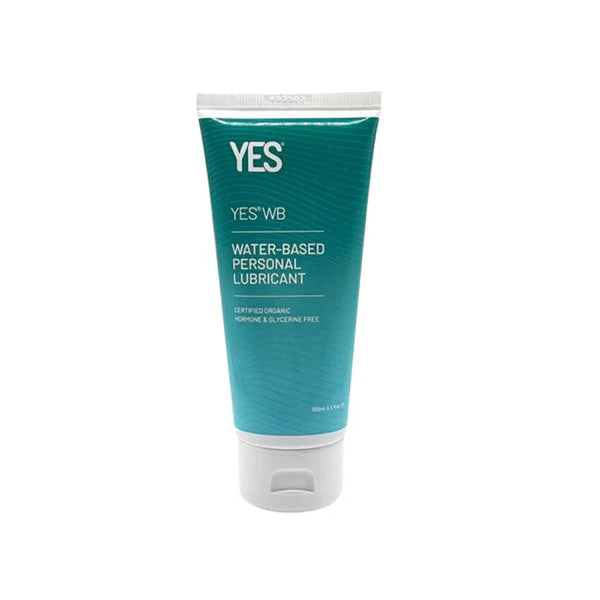
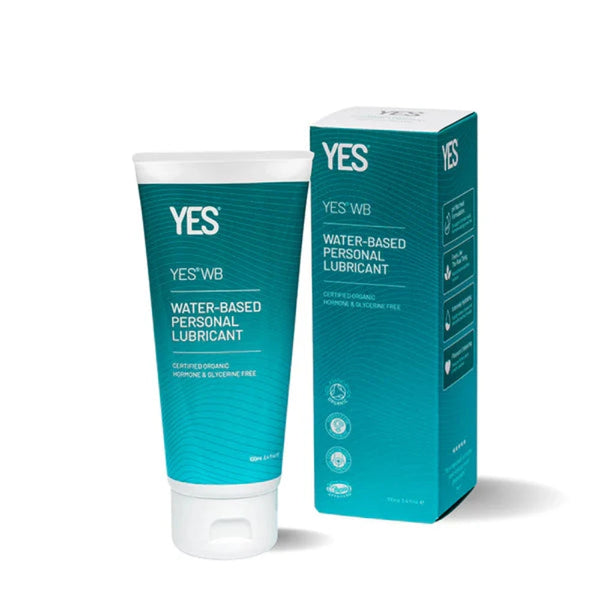
- YES WB - named compatible with natural rubber latex and polyisoprene condoms. Certified organic, pH-matched, glycerin-free. The one we reach for first with sensitive skin.
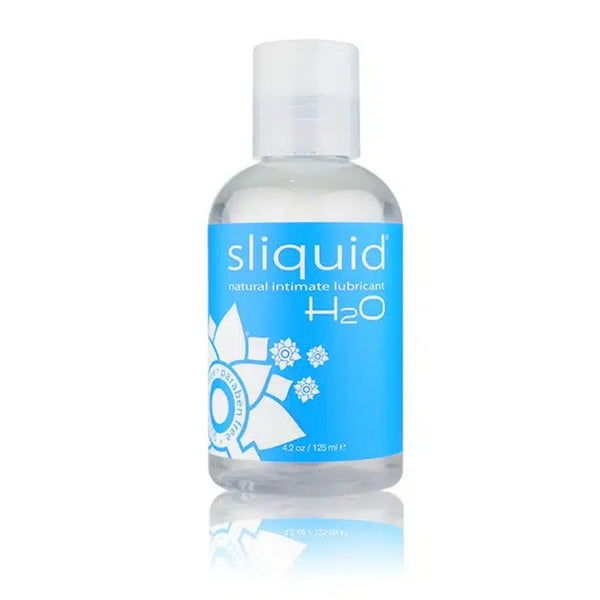
- Sliquid H2O - named safe with latex and polyurethane condoms. Six ingredients, glycerin-free, the lightest feel in the range.
- Sliquid Sassy - named safe with latex and polyurethane. The thick one, for when a lighter formula dries out too quickly.
- JO Agapé Original - named compatible with latex and polyisoprene. Six ingredients and no botanical extracts, so it's the shortest list we stock if you react to most things.
- JO Aloe - named compatible with latex and polyisoprene. Same base as Agapé with aloe and hyaluronic acid, so it holds its slip longer and needs fewer top-ups.
If you use SKYN or another polyisoprene condom, YES WB, JO Agapé or JO Aloe are the ones with that material on the label. If you use polyurethane, Sliquid is the brand that names it. In practice a water-based formula with no oil in it is safe with all of them, but where the manufacturer has done the testing we'd rather you have that certainty.
Why did it still sting, then?
This is the question behind a lot of the drawer-full-of-bottles stories. If a water-based lube is condom-safe but still stung, the condom was never the issue. It's almost always an ingredient. Glycerin, propylene glycol, parabens, fragrance, flavour and warming or tingling agents are the usual suspects, and many supermarket lubes and pre-lubricated condoms contain at least one of them. Our guide to lubricant ingredients to avoid goes through each one, and every lubricant in our range is free of all of them.
The other common cause is simply not enough. A pea-sized dab on the outside of the condom is where most people stop, and it isn't enough to get through more than a couple of minutes.
How much lube should you use with a condom, and where?
More than you think, in two places. A few drops inside the tip of the condom before it goes on adds sensation for the wearer and stops the condom dragging. Then a generous amount on the outside, on the condom itself and at the vaginal entrance, both. NSW Health suggests starting small and adding more as you go, and that advice holds: you can always add, and the only downside of too much is a towel.
Water-based absorbs, so if things start to feel like friction again, top up rather than push through. Friction is what tears condoms and what makes people give up on them.
Water-based lube, condoms and pelvic health
The reason this matters to us specifically is that so many of the people we see are using condoms at exactly the moments their body is least cooperative: the months after birth, while breastfeeding, during a dilator or pelvic wand program, or when sex has been painful and they're easing back in. Natural lubrication is lower at all of those points for hormonal reasons that have nothing to do with desire, and friction that would be a minor annoyance otherwise becomes the thing that stops intimacy altogether.
A water-based lubricant is the simplest tool in that situation: it's condom-safe, it's safe on silicone dilators and wands, and one bottle covers everything. If pain during sex isn't easing with lubricant and patience, that is worth a conversation with a pelvic health physiotherapist, because there's usually a reason and it's usually workable.
Where to find them
Every product above is in our water-based lube collection, with the condom compatibility from each manufacturer listed on the product page. If you're choosing for the first time, YES WB or Sliquid H2O is the sensible starting point, and JO Aloe or Sliquid Sassy if you've found lighter formulas dry out on you. Still deciding between types? Our Australian lubricant guide covers water, silicone and oil side by side.