Two conditions get tangled together in every search about bowels and prolapse, and the difference matters because the management paths aren't the same. A rectocele is the rectum bulging forward into the back wall of the vagina; it's one of the standard types of pelvic organ prolapse. A rectal prolapse is different: the rectum itself telescopes down through the anus, either internally or, in a full-thickness prolapse, visibly outside the body. Both show up in pelvic health physiotherapy clinics, both revolve around the same set of bowel habits, and one of them sometimes needs a surgeon. Here's how to tell them apart and what actually helps.
Rectocele or rectal prolapse: which one do I have?
A rectocele typically shows up as a bulge sensation in the vagina and difficulty emptying the bowel completely, sometimes with a feeling that stool gets caught. A rectal prolapse typically involves the sensation of something coming down through the back passage, particularly during or after a bowel motion, and in full-thickness cases tissue that can be seen or felt at the anus. You don't need to self-diagnose this; an examination sorts it out quickly, and that's worth having because the plans differ.
The bowel habits at the heart of both
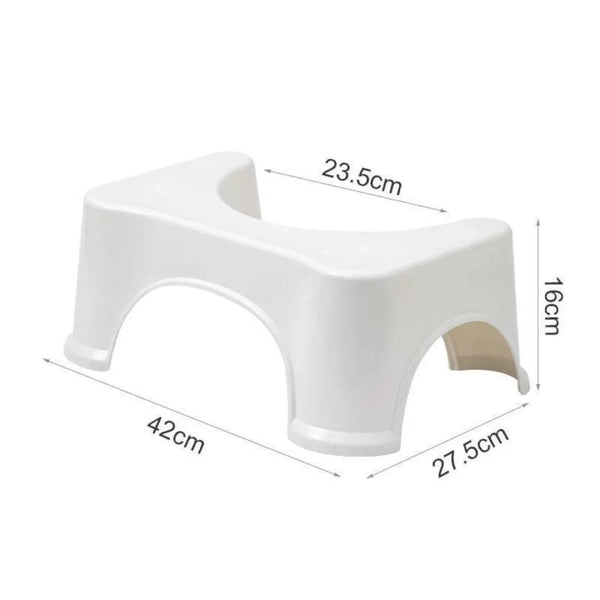
Whatever the diagnosis, conservative management starts in the same place: taking the force out of every bowel motion. That means enough fluid and fibre to keep stool soft and formed (our guide to relieving constipation covers how much of each you actually need), regular meals so your bowel has a rhythm to work with, and responding to the urge rather than deferring it. Then technique: knees above hips on a footstool, lean forward with a long spine, belly relaxed, and breathe out as you go rather than holding your breath and forcing. Straining is the enemy in both conditions, and our guide to how to poo properly walks through the full method.
Supporting the emptying, not forcing it
For a rectocele, a pelvic health physio can teach you perineal support (using your hand to support the area between the vagina and anus during a bowel motion) or gentle splinting, which many women work out by instinct and are relieved to hear is a legitimate, teachable technique. Pessaries can also play a role in supporting the back vaginal wall; space-occupying designs like the cube are among the options a trained fitter may consider, and our pessary guide covers how fitting works. For internal rectal prolapse, the same bowel-care foundations apply, alongside pelvic floor training where assessment supports it.
What a pelvic health physio does here
Assessment first: which condition it is, how your pelvic floor is coordinating (some people push down when they should relax and open), and which habits are loading the system. Then a plan: bowel routine, toileting mechanics, pelvic floor work matched to what the assessment found, and the strength and fitness work that keeps the rest of you well. The stance we bring to every prolapse applies here too: this is a manageable problem, not a life sentence, and with the right support there's no reason you can't get back to the activities you love.
When a specialist needs to be involved
Full-thickness rectal prolapse, where tissue visibly protrudes through the anus, generally needs a colorectal surgical opinion; conservative care still matters around it, but it doesn't fix the prolapse itself. See your GP promptly for a referral if that's your picture, and seek prompt care for rectal bleeding, which always deserves its own assessment. For everything else in this space, a GP and a pelvic health physiotherapist are the right first two doors, and the National Continence Helpline (1800 33 00 66) is a free, confidential place to start with a nurse who hears these questions every day.